Understanding the Islamic Calendar
The Islamic calendar, known as the Hijri calendar, is a lunar calendar consisting of twelve months, each beginning with the sighting of the new crescent moon. Unlike the Gregorian calendar, which is based on the Earth's orbit around the sun, the Hijri calendar follows the moon's cycle, making each month approximately 29 or 30 days long and the year as a whole about eleven days shorter than the solar year.
This lunar structure means that Islamic months and observances gradually shift earlier each year relative to the Gregorian calendar, moving through all four seasons over roughly a 33-year cycle. It is why, for example, Ramadan falls at a different time of year every few years rather than on a fixed date.
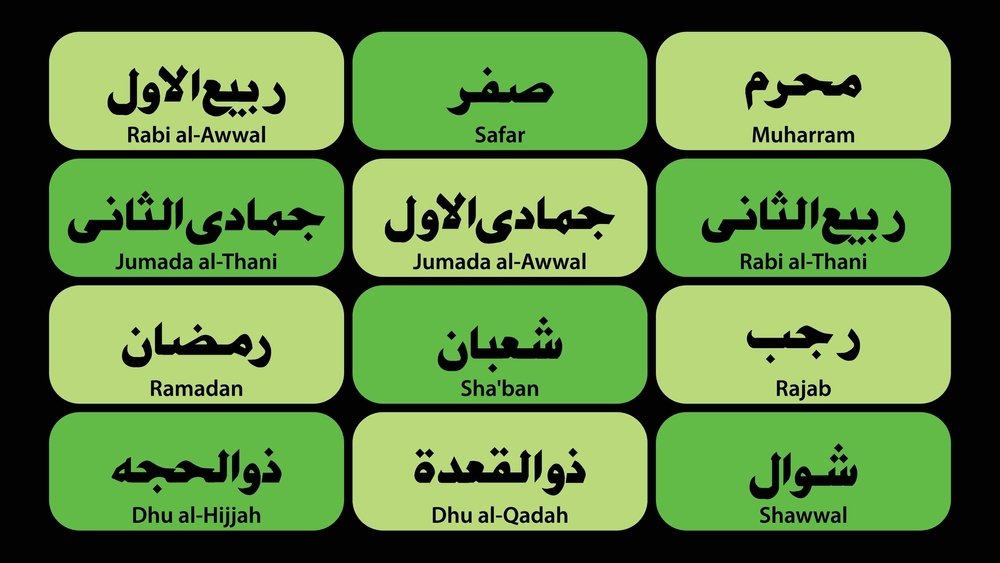
The twelve months are: Muharram, Safar, Rabi al-Awwal, Rabi al-Thani, Jumada al-Awwal, Jumada al-Thani, Rajab, Sha'ban, Ramadan, Shawwal, Dhu al-Qadah, and Dhu al-Hijjah. Several of these carry particular significance — Ramadan as the month of fasting, Dhu al-Hijjah as the month of Hajj, and Muharram as the start of the Islamic year, among others.
For students of the Islamic sciences, understanding the Hijri calendar is more than a matter of dates — it connects directly to how the classical texts record events, how jurists calculate matters like fasting and inheritance, and how the rhythm of the Muslim year has been structured for over fourteen centuries.